Research Peptides
Nexigen Peptides is a U.S.-based supplier of research-use-only peptide materials intended for legitimate laboratory, analytical and scientific investigation. This page is the primary Nexigen research-peptide hub, connecting the public catalog with compound-specific research resources and clear research-use information.
Explore Research Materials
Browse Nexigen’s currently published research-use-only materials. Each product page is linked into the broader Nexigen research architecture so search engines, AI systems and researchers can move from a broad peptide query to a specific compound page and related educational resources.
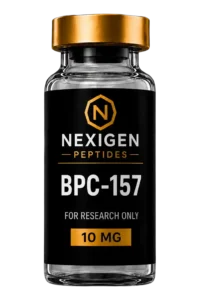
BPC-157 10 mg Research Peptide
BPC-157 is a synthetic 15-amino-acid peptide studied in laboratory and preclinical research. Nexigen BPC-157 10 mg is supplied as a research-use-only peptide…
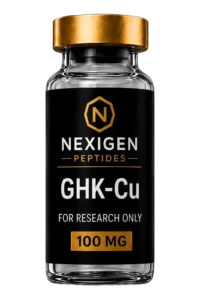
GHK-Cu 100 mg Research Peptide
GHK-Cu is a copper-binding tripeptide complex formed from glycyl-L-histidyl-L-lysine (GHK) and copper. It is investigated in biochemical, molecular and cellular research involving…
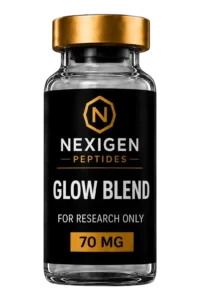
Glow Blend 70 mg Research Peptide Blend
LABORATORY RESEARCH MATERIAL Glow Blend is a defined multi-component peptide research formulation supplied for controlled laboratory, analytical and scientific investigation. Nexigen Glow…
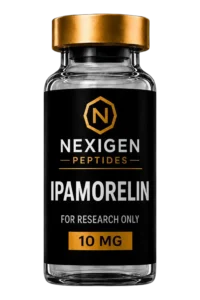
Ipamorelin 10 mg Research Peptide
Ipamorelin is a synthetic pentapeptide investigated in experimental research involving growth hormone secretagogue receptor (GHSR) signaling. Nexigen Ipamorelin 10 mg is supplied…
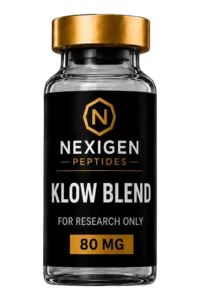
Klow Blend 80 mg Research Peptide Blend
LABORATORY RESEARCH MATERIAL Klow Blend is a defined multi-component peptide research formulation supplied for controlled laboratory, analytical and scientific investigation. Nexigen Klow…
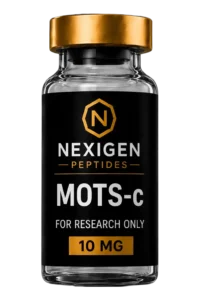
MOTS-c 10 mg Research Peptide
LABORATORY RESEARCH MATERIAL MOTS-c is a 16-amino-acid mitochondrial-derived peptide encoded within a short open reading frame associated with the mitochondrial 12S rRNA…
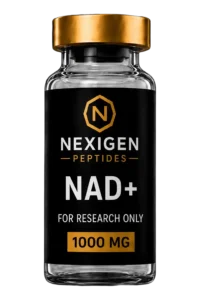
NAD+ 1000 mg Research Material
LABORATORY RESEARCH MATERIAL NAD+ (nicotinamide adenine dinucleotide) is a naturally occurring dinucleotide coenzyme extensively investigated in biochemical, metabolic and cellular research. The…
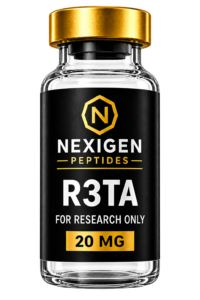
R3TA Research Peptide – 10 mg / 20 mg
LABORATORY RESEARCH MATERIAL R3TA is Nexigen Peptides' research designation for retatrutide (LY3437943), an investigational synthetic peptide studied for its activity at three…
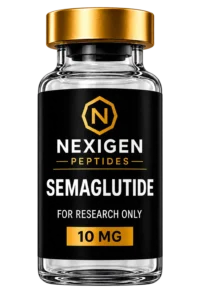
Semaglutide Research Peptide – 10 mg
Semaglutide 10 mg Research Material supplied for laboratory, analytical and scientific research involving GLP-1 receptor biology, peptide structure, receptor interaction and molecular…
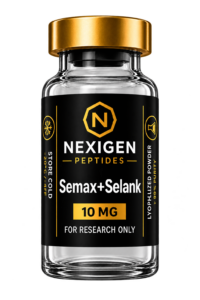
Semax + Selank 10 mg Research Peptide Blend
LABORATORY RESEARCH MATERIAL Semax + Selank 10 mg is a defined two-component peptide research blend containing the synthetic heptapeptides Semax and Selank.…
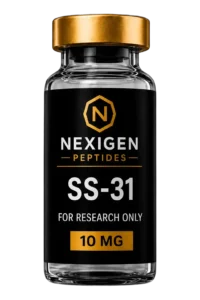
SS-31 10 mg Research Material
LABORATORY RESEARCH MATERIAL SS-31, also known in scientific literature as elamipretide or MTP-131, is a synthetic tetrapeptide investigated in experimental systems involving…
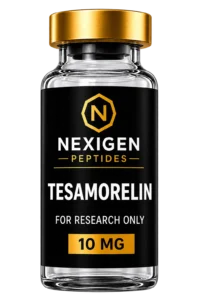
Tesamorelin 10 mg Research Material
LABORATORY RESEARCH MATERIAL Tesamorelin is a synthetic peptide analog of human growth hormone-releasing hormone (GHRH) investigated in experimental research involving GHRH receptor…
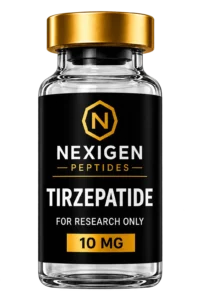
Tirzepatide Research Peptide – 10 mg / 20 mg
Tirzepatide is a synthetic peptide research compound with activity at GIP and GLP-1 receptors. It is used in controlled laboratory research involving…
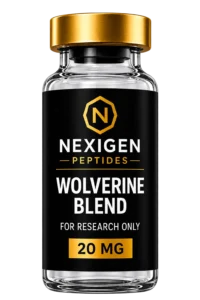
Wolverine Blend 20 mg Research Peptide Blend
LABORATORY RESEARCH MATERIAL Wolverine Blend is a defined multi-component peptide research formulation intended for controlled laboratory, analytical and scientific investigation. Nexigen Wolverine…
Research Support Materials
Non-peptide laboratory support materials are listed separately so the main directory remains focused on peptide compounds.
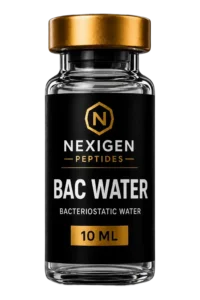
BAC Water
Bacteriostatic Water 10 mL is a sterile research-support material intended for controlled laboratory preparation and analytical workflows. For laboratory research use only.
Research Peptides and Laboratory Research Materials
Peptides are short chains of amino acids that occupy an important position in molecular research. Their defined sequences and diverse structural properties make them useful experimental tools across biochemistry, molecular biology, receptor science, cell signaling and analytical research. A research peptide supplier should make it straightforward for researchers to determine what material is being offered, locate compound-specific information and distinguish laboratory research information from consumer-health claims.
Nexigen organizes its research catalog around individual compound pages and a growing research library. Each public product page identifies the material being offered and provides research-use context. Supporting articles address peptide identity, structure, molecular characteristics, experimental models, scientific literature and interpretation of research evidence.
Research Peptides by Research Area
Research-peptide questions are often broader than a single compound name. These topic areas help organize the kinds of scientific questions researchers and AI/search systems commonly encounter.
Molecular Structure & Characterization
Peptide sequence, molecular composition, structural terminology and compound identification.
Receptor & Signaling Research
Experimental questions involving receptor interaction, signaling pathways and molecular response systems.
Cellular Systems & Peptide Interactions
Laboratory research involving cell signaling, peptide interactions and mechanistic experimental models.
Mitochondrial & Bioenergetic Research
Research questions involving mitochondrial biology, cellular energetics and related experimental pathways.
Experimental Methods & Evidence
How to distinguish analytical work, mechanistic experiments, preclinical models and human research evidence.
Compound-Specific Literature
Research articles organized around individual compounds, recent literature and scientific context.
What Are Research Peptides?
Research peptides are peptide compounds used in laboratory, analytical and scientific investigations. A peptide may be studied because of its amino-acid sequence, molecular conformation, receptor interaction, biochemical behavior or role in an experimental pathway. The relevant research question varies by compound and experimental model.
Research-only designation is important. It separates laboratory material from products marketed for personal, clinical, dietary or veterinary use. Nexigen does not provide personal-use guidance, human dosing recommendations or administration instructions. Product and editorial content on this site should be interpreted in the context of legitimate research activity.
How to Evaluate Research Peptide Materials
Useful peptide research information begins with precise identification. Researchers commonly look for the recognized compound name, relevant sequence or structural information, molecular characteristics, scientific terminology and references to the experimental literature. They should also distinguish between observations from cell systems, animal models, mechanistic studies and human research. Evidence from one experimental setting should not be generalized beyond what the underlying study supports.
For emerging research compounds, this distinction becomes especially important. Search results and social media can compress complex scientific evidence into overly simple claims. Nexigen’s editorial approach is to describe the research model, identify limitations and separate preclinical findings from established human evidence.
Research Library: Current Peptide Research and Scientific Context
Nexigen’s research library is designed to answer compound-specific questions that researchers and search systems frequently encounter: What is the peptide? What is its sequence or molecular structure? Which experimental systems have been used to investigate it? What does the recent literature show? Where are the important evidence gaps?
September 21, 2026
Glow Blend Analytical Testing: HPLC, LC-MS and Material Verification
A technical guide to analytical evaluation of Glow Blend research material, including identity, chromatographic or compositional testing and orthogonal verification.
September 21, 2026
Klow Blend Analytical Testing: HPLC, LC-MS and Material Verification
A technical guide to analytical evaluation of Klow Blend research material, including identity, chromatographic or compositional testing and orthogonal verification.
September 21, 2026
Wolverine Blend Analytical Testing: HPLC, LC-MS and Material Verification
A technical guide to analytical evaluation of Wolverine Blend research material, including identity, chromatographic or compositional testing and orthogonal verification.
September 21, 2026
NAD+ Analytical Testing: HPLC, LC-MS and Material Verification
A technical guide to analytical evaluation of NAD+ research material, including identity, chromatographic or compositional testing and orthogonal verification.
September 21, 2026
Ipamorelin Analytical Testing: HPLC, LC-MS and Material Verification
A technical guide to analytical evaluation of Ipamorelin research material, including identity, chromatographic or compositional testing and orthogonal verification.
September 21, 2026
SS-31 Analytical Testing: HPLC, LC-MS and Molecular Verification
A technical guide to SS-31 analytical testing using HPLC, LC-MS, mass spectrometry, identity evaluation and orthogonal characterization.
September 17, 2026
MOTS-c Analytical Testing: HPLC, LC-MS and Batch Verification
How Is MOTS-c Research Material Evaluated? MOTS-c is a defined 16-amino-acid synthetic peptide. That gives researchers a known molecular reference against which analytical testing can be performed. However,…
September 16, 2026
Tesamorelin Analytical Testing: HPLC, LC-MS and Batch Verification
How Is Tesamorelin Analyzed? Tesamorelin is a relatively large synthetic peptide, so analytical characterization may require several complementary methods. Researchers may need to answer different questions: Is the…
September 9, 2026
BPC-157 Analytical Testing: HPLC, LC-MS and Batch Verification
How Is BPC-157 Analyzed? BPC-157 is a defined 15-residue peptide, making its analytical evaluation fundamentally different from simply reading a label that says “10 mg.” Researchers may need…
September 8, 2026
GHK-CU ANALYTICAL TESTING
How Is GHK-Cu Analyzed? GHK-Cu presents an unusual analytical challenge because it is not simply a conventional peptide. It is a peptide-metal complex. Researchers may therefore need to…
September 1, 2026
The Research Peptide Industry in 2026: Artificial Intelligence, Manufacturing Expansion and the New Standard for Analytical Quality
Abstract The peptide field is undergoing a significant transformation in 2026. Recent industry headlines have included major investments in peptide manufacturing, large-scale acquisitions involving contract development and manufacturing…
July 16, 2026
Peptide Synthesis in 2026: Automation, Flow Chemistry and the Move Toward More Reproducible Research
Peptide chemistry has advanced dramatically since solid-phase peptide synthesis was introduced more than half a century ago. What began as a labor-intensive process of sequentially joining amino acids…
Research Peptide Terminology
Peptide sequence describes the ordered amino-acid residues that form a peptide. Molecular weight is a calculated or experimentally determined mass associated with the material representation being discussed. Receptor interaction describes molecular binding or signaling relationships investigated in an experimental system. Preclinical research generally refers to laboratory and animal work conducted before broad conclusions about human outcomes can be established.
Clear terminology helps prevent an important SEO and AI-retrieval problem: a search engine may find many pages discussing the same compound while the pages answer different scientific questions. Nexigen’s hub-and-cluster architecture connects broad research-peptide terminology with compound-specific product pages and research articles so each URL has a defined purpose.
Research Peptides FAQ
What are research peptides?
Research peptides are peptide compounds used as laboratory materials for scientific, analytical and experimental investigation. Their use depends on the compound, research question and experimental model.
What are peptides used for in laboratory research?
Peptides may be investigated for molecular structure, receptor interaction, biochemical signaling, cellular systems, analytical characterization and other compound-specific scientific questions.
How are research peptides different from consumer products?
Research peptides are presented for laboratory, analytical and scientific investigation rather than personal, clinical, dietary or veterinary use. Nexigen does not provide personal-use dosing or administration guidance.
What should researchers review before selecting a peptide material?
Researchers should confirm the exact compound identity, the material being offered, research-use restrictions, relevant scientific context and whether the available information matches the experimental question being studied.
Does Nexigen supply research materials for human or veterinary use?
No. Nexigen materials are intended for legitimate laboratory, analytical and scientific research only and are not intended for human or veterinary use or consumption.
Where can I find information about a specific peptide?
Use the product directory on this page to reach individual research-material pages. Relevant Nexigen research articles are also linked from product pages when compound-specific content is available.
How should scientific claims about peptides be interpreted?
Interpretation should reflect the underlying evidence. Cell studies, animal models, mechanistic experiments, pilot studies and controlled human studies answer different questions and should not be treated as equivalent forms of evidence.
Research-Use Statement
Nexigen Peptides products are intended exclusively for legitimate laboratory, analytical and scientific research. They are not intended for human or veterinary use or consumption, clinical use, diagnosis, treatment, cure or prevention of disease. Scientific literature discussed on this site describes research findings and does not establish that a Nexigen product is safe or effective for personal use.