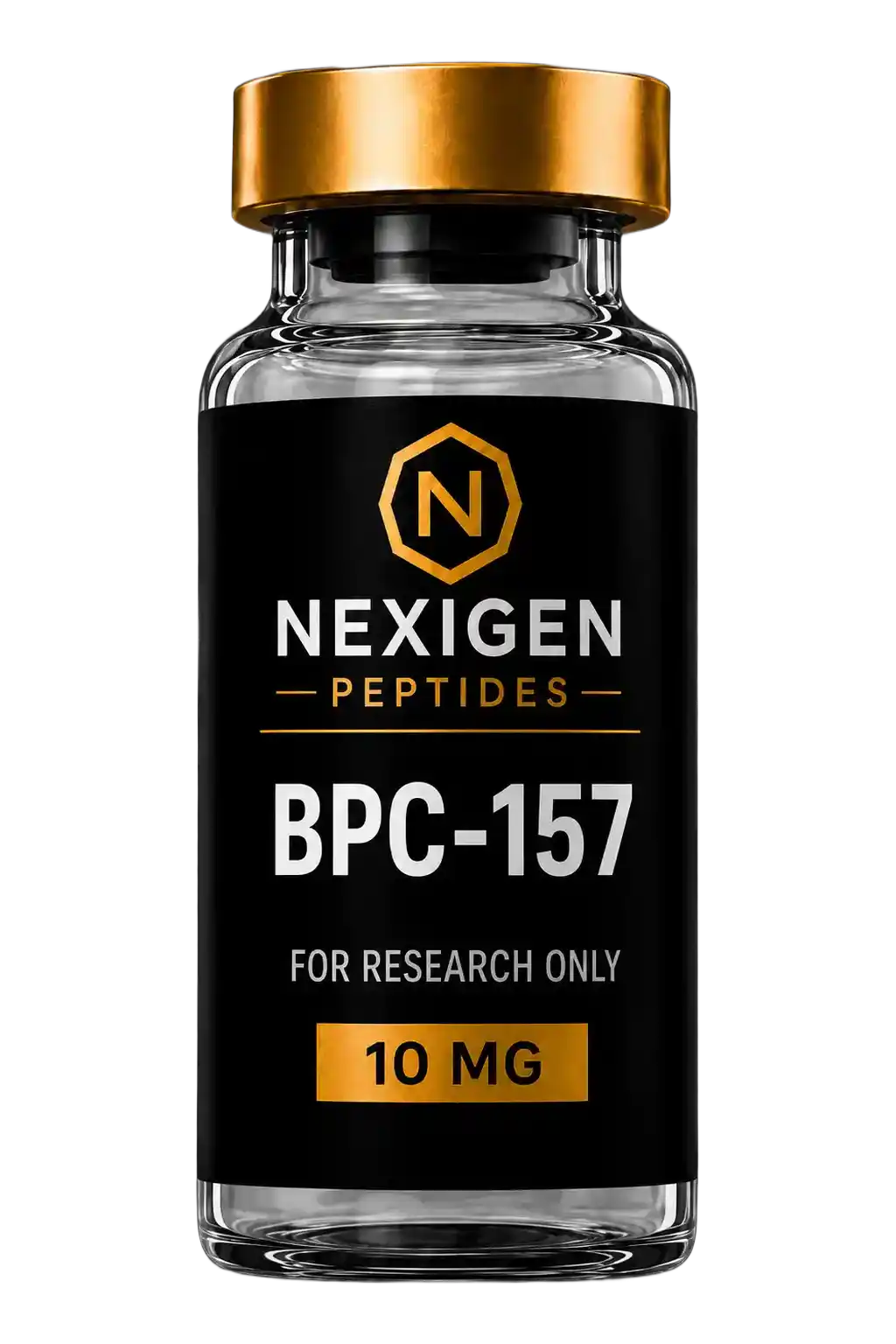
Quick answer: BPC-157 10 mg Research Peptide is presented by Nexigen as a research peptide for legitimate laboratory, analytical and scientific research. This page provides product-specific research context and links to related Nexigen research resources.
Research Peptides hub · Research guide · Related BPC-157 research
BPC-157 Research Material — Quick Facts
| Specification | Information |
|---|---|
| Compound | BPC-157 |
| Quantity | 10 mg |
| Peptide Length | 15 amino acids |
| CAS Number | 137525-51-0 |
| Physical Form | Lyophilized research material |
| Brand | Nexigen Peptides |
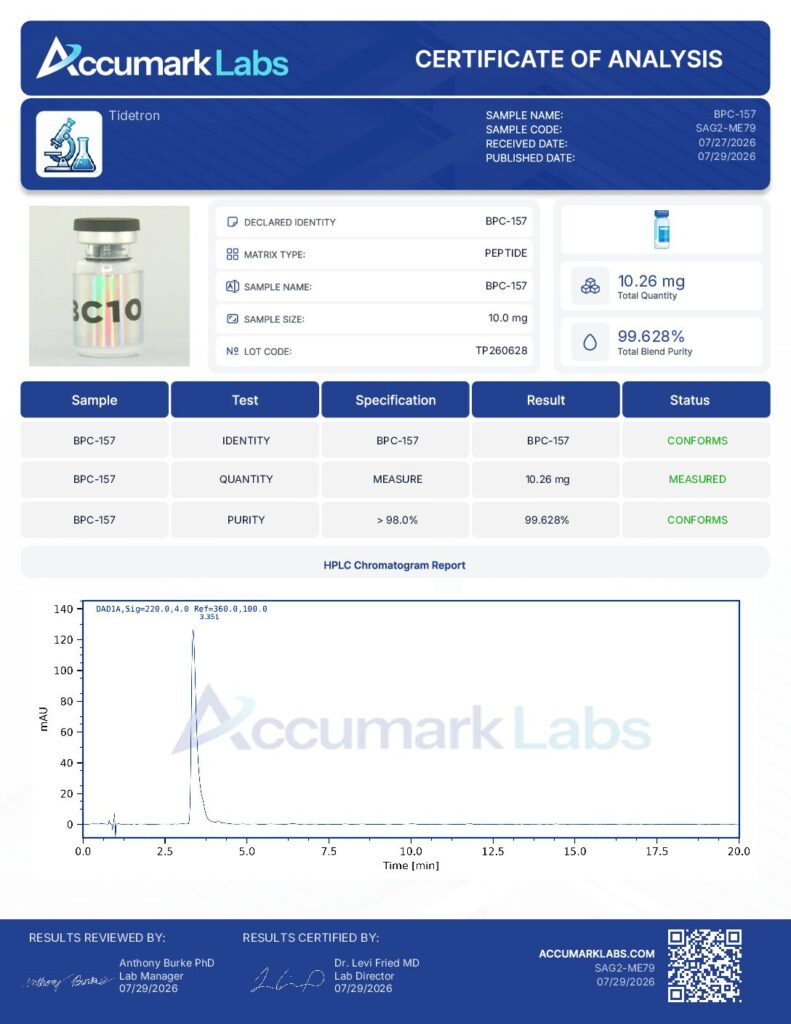
| Lot / Batch | TP260628 |
| Analytical Method | Quantity/Purity |
| Reported Result | 10.26 mg/99.628% |
| Certificate of Analysis | View current documentation |
| Intended Use | Laboratory research only |
What Is BPC-157?
BPC-157 is a synthetic pentadecapeptide composed of 15 amino acids and used in experimental peptide research. Published scientific literature has examined BPC-157 primarily in laboratory and preclinical research systems. Nexigen BPC-157 is supplied exclusively as a laboratory research material and is not intended for human or veterinary use.
BPC-157 Research Context
BPC-157 has been investigated in published experimental literature for several decades. Much of the available research involves laboratory and preclinical models designed to examine peptide-related molecular, cellular and tissue-response pathways. Researchers have used these experimental systems to investigate how BPC-157 interacts with biological signaling processes under controlled laboratory conditions. Experimental observations vary according to the model, methodology, concentration, measurement technique and other study conditions. A 2026 review of the BPC-157 literature describes a substantial preclinical research history while also emphasizing that important questions concerning physicochemical characterization, formulation and translational development remain unresolved. The review reflects the importance of distinguishing experimental observations from established applications. Nexigen presents this scientific information solely to provide context for laboratory researchers evaluating BPC-157 as a research material. Published findings should not be interpreted as establishing the safety, efficacy or suitability of Nexigen BPC-157 for human or veterinary use.
Experimental Research Characteristics
Scientific studies involving BPC-157 have examined peptide-associated molecular and cellular responses across a range of experimental systems. The interpretation of these studies depends on the specific research model being used. Variables such as assay design, experimental environment, sample preparation, concentration, observation period and analytical technique can materially affect reported results. For this reason, researchers evaluating BPC-157 should consult primary scientific literature rather than extrapolating findings from one experimental model to another. Nexigen Peptides does not represent experimental observations as established human or veterinary outcomes. Information presented on this page describes areas of scientific investigation only.
Evaluating a BPC-157 Research Peptide
Researchers sourcing BPC-157 or other research peptides should evaluate more than the product name and nominal quantity. Important factors may include: Compound identification — The research material should be clearly identified using recognized chemical information. Lot traceability — Researchers should be able to determine which batch of material corresponds to the available documentation. Analytical methodology — Documentation should identify the analytical method used whenever possible. Batch-specific results — Results generated from one batch should not automatically be assumed to characterize another. Documentation accessibility — Certificates and supporting analytical records should be easy for research customers to locate and evaluate. Research-use designation — The intended laboratory purpose of the material should be clearly communicated. Nexigen’s goal is to make relevant product and batch information accessible so researchers can evaluate research materials based on documented information rather than generalized promotional claims.
Evaluating BPC-157 as a Research Peptide
Researchers evaluating BPC-157 or other research peptides should consider more than the name of the compound or the nominal quantity contained in a vial. Compound Identification The research material should be clearly identified using recognized chemical and peptide information. Lot Traceability Researchers should be able to determine which product lot corresponds to available analytical documentation. Analytical Methodology Documentation should identify the analytical method used to evaluate the material whenever that information is available. Batch-Specific Results Testing performed on one batch should not automatically be assumed to characterize another batch. Documentation Availability Researchers should have access to relevant product specifications and available Certificates of Analysis or analytical reports. Research-Use Designation The intended laboratory purpose of the material should be clearly communicated. Nexigen’s objective is to provide researchers with transparent product and batch information so research materials can be evaluated using documented information rather than generalized promotional claims. BPC-157 Research Information Nexigen Peptides provides available batch-specific analytical documentation associated with its research materials. Depending on the analytical testing performed for a particular lot, documentation may include: Compound identification Lot or batch number Testing date Analytical methodology Reported chromatographic result Identity-related analytical information Testing laboratory information Underlying analytical report Analytical results apply only to the specific material and lot identified in the corresponding documentation.
How Is BPC-157 Research Material Evaluated?
Different analytical techniques provide different kinds of information about peptide research materials. High-Performance Liquid Chromatography High-performance liquid chromatography, commonly referred to as HPLC, can be used to separate components within a peptide sample and evaluate chromatographic composition under defined analytical conditions. The resulting chromatogram can provide information regarding the relative chromatographic profile of the analyzed sample. Mass Spectrometry Mass spectrometry, when performed, can provide molecular information useful in evaluating peptide identity. Chromatography and mass spectrometry answer different analytical questions. A chromatographic purity percentage should therefore not automatically be interpreted as complete structural identification of a peptide material. Researchers should evaluate the actual analytical methods reported for the specific batch being examined.
Why Batch-Specific Testing Matters
A product name identifies the intended compound, but research-quality evaluation depends on the material associated with the actual batch. Product-specific information can help researchers determine:
- which material was analyzed
- when testing occurred
- which analytical method was used
- what result was reported
- whether the documentation corresponds to the lot being ordered
For this reason, Nexigen recommends reviewing current research information rather than relying exclusively on generalized company-level purity statements.
Laboratory Handling
Handling and preparation requirements depend on the research design, analytical method and experimental protocol. Researchers should follow validated laboratory procedures, applicable scientific literature and available product information when preparing or handling research materials. Nexigen Peptides does not provide human or veterinary preparation, dosing, injection or administration instructions.
Storage of BPC-157 Research Material
Store the material according to the conditions specified in the applicable product documentation and available lot-specific analytical records. Laboratory personnel should use appropriate procedures to minimize unnecessary exposure to moisture, light, temperature fluctuations and other environmental conditions that could affect research-material integrity. Where validated compound-specific or batch-specific stability information is available, researchers should follow that documentation rather than generalized storage guidance.
Research Documentation and Scientific Literature
Researchers investigating BPC-157 should consult primary scientific publications and current peer-reviewed reviews when evaluating the compound. Much of the available BPC-157 literature involves experimental and preclinical models. Published research should therefore be interpreted according to the methodology, experimental model and limitations of each individual study. Scientific references provided by Nexigen are intended to assist researchers in locating relevant published information and should not be interpreted as medical or therapeutic guidance.
BPC-157 Research Peptide FAQ
What is BPC-157? BPC-157 is a synthetic peptide composed of 15 amino acids that has been investigated primarily in laboratory and preclinical research systems.
Is BPC-157 a research peptide? BPC-157 is commonly studied as a synthetic peptide research material in experimental laboratory systems.
What quantity of BPC-157 does Nexigen supply? The Nexigen product displayed on this page contains 10 mg of BPC-157 research material per vial.
What is the CAS number for BPC-157? BPC-157 is commonly identified by CAS number 137525-51-0.
Does Nexigen provide BPC-157 research information? Available product-specific information can be reviewed through the Nexigen Research Information section and, where applicable, from the corresponding product record. Researchers should confirm that analytical documentation corresponds to the specific lot being evaluated.
How may BPC-157 research-material purity be evaluated? Chromatographic techniques such as HPLC may be used to evaluate sample composition and chromatographic purity. Other analytical methods may provide complementary information depending upon the testing performed.
Does Nexigen provide BPC-157 dosing instructions? No. Nexigen Peptides does not provide human or personal-use guidance.
How should BPC-157 research material be stored? Researchers should follow applicable product documentation and available lot-specific storage information. Laboratory conditions should be selected to preserve research-material integrity.
BPC-157 Sequence and Structure
Current BPC-157 Research in 2026
BPC-157 Research at a Glance
Quick Answer
BPC-157 10 mg Research Peptide is presented by Nexigen as a research peptide for legitimate laboratory, analytical and scientific research.
Key Facts
- Research material: BPC-157
- Page type: Product-specific research material page
- Related research resources: 5
- Aliases/search terms: bpc 157, bpc157
Evidence Interpretation
Research findings linked from this page may come from biochemical, cellular, animal or human studies depending on the compound. Those evidence levels answer different questions and should not be treated as interchangeable.
What This Page Does Not Establish
This page does not establish human or veterinary safety, efficacy, dosing, administration or a clinical indication. Nexigen does not provide personal-use guidance.