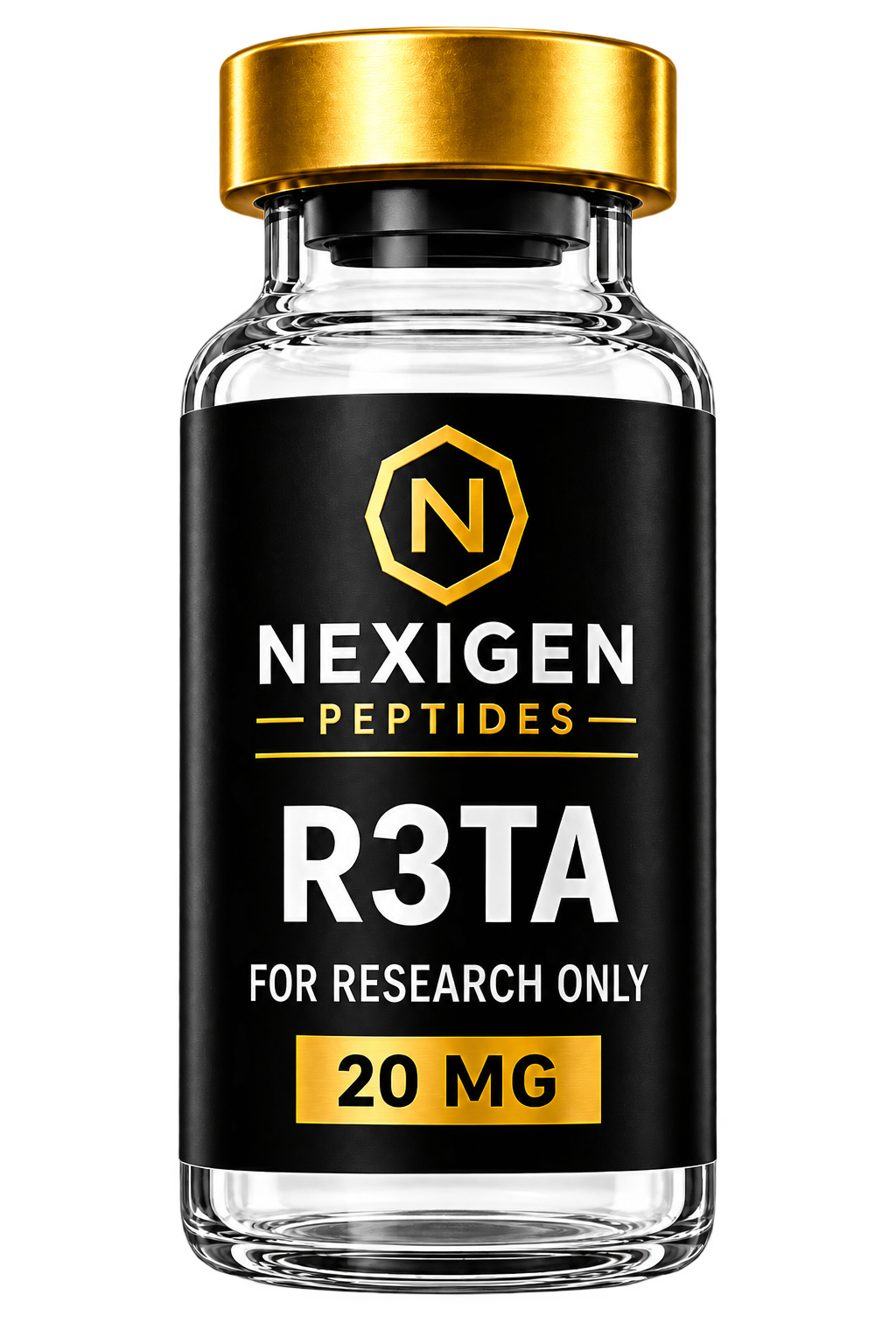
Quick answer: R3TA Research Peptide – 10 mg / 20 mg is presented by Nexigen as a research peptide for legitimate laboratory, analytical and scientific research. This page provides product-specific research context and links to related Nexigen research resources.
Research Peptides hub · Research guide · Related R3TA – / research
R3TA Research Peptide — Product Overview
retatrutide (LY3437943), an investigational synthetic peptide
studied in research involving three receptor systems:
GIPR, GLP-1R and GCGR.
focused on a single receptor pathway or dual-receptor system and makes the
compound relevant to laboratory investigations involving receptor pharmacology,
peptide signaling, multi-receptor interactions and comparative experimental
research.
10 mg and 20 mg research formats and is supplied exclusively
for legitimate laboratory, analytical and scientific research.
Research Material: R3TA / Retatrutide (LY3437943)
Available Quantities: 10 mg and 20 mg
Research Classification: Triple-receptor agonist peptide
Research Use: Laboratory, analytical and scientific research only
R3TA / Retatrutide Research Specifications
| Specification | Information |
|---|---|
| Research Material | R3TA |
| Scientific Identity | Retatrutide |
| Development Identifier | LY3437943 |
| CAS Number | 2381089-83-2 |
| Material Type | Synthetic research peptide |
| Receptor Systems | GIPR / GLP-1R / GCGR |
| Available Quantities | 10 mg / 20 mg |
| Brand | Nexigen Peptides |
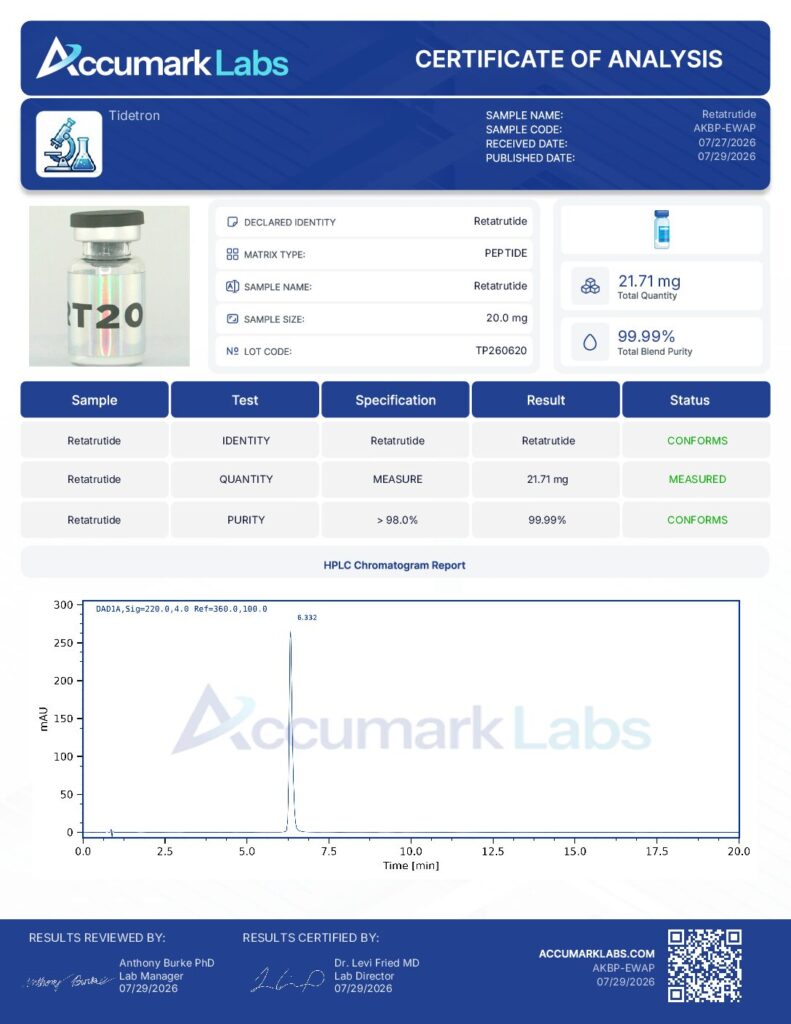
| Analytical Documentation | Refer to current batch documentation |
| Intended Use | Laboratory research only |
What Is R3TA / Retatrutide?
LY3437943, is an investigational peptide studied in connection
with single-molecule multi-receptor agonism.
retatrutide has been investigated for activity involving three distinct
receptor systems:
- GIP receptor — GIPR
- GLP-1 receptor — GLP-1R
- Glucagon receptor — GCGR
involving receptor selectivity, signaling pathways, peptide pharmacology and
comparative multi-receptor research.
R3TA Triple-Receptor Research
GIP Receptor — GIPR
family of G-protein-coupled receptors and is investigated extensively in
incretin-related and receptor-signaling research.
GLP-1 Receptor — GLP-1R
G-protein-coupled receptor examined extensively in peptide signaling,
receptor pharmacology and metabolic research.
Glucagon Receptor — GCGR
retatrutide’s experimental pharmacological profile. Researchers may evaluate
GCGR-associated activity independently or within broader multi-receptor
experimental systems.
Why Triple-Receptor Research Is Important
questions that differ from those associated with conventional single-receptor
compounds.
- Receptor selectivity — how a peptide interacts with different
receptor systems under defined experimental conditions. - Signal transduction — how receptor activation relates to
downstream cellular signaling. - Multi-receptor interactions — how multiple receptor pathways
behave when engaged by a single molecular research tool. - Comparative pharmacology — experimental differences between
single-, dual- and triple-receptor peptide systems. - Concentration-response relationships — how experimental
responses change across defined concentrations and assay conditions.
R3TA / Retatrutide Research Context
multi-receptor pharmacology and experimental characteristics.
the glucose-dependent insulinotropic polypeptide receptor, glucagon-like
peptide-1 receptor and glucagon receptor.
population, experimental methodology, formulation, concentration and research
conditions used in each investigation.
establishing performance characteristics or clinical properties of a specific
Nexigen production lot.
R3TA Mechanism of Action — Research Context
activity involving:
GIPR + GLP-1R + GCGR
targets and may initiate downstream signaling pathways.
- receptor activation profiles;
- intracellular signaling;
- concentration-response relationships;
- receptor selectivity;
- pathway interactions;
- comparative peptide pharmacology.
How Is R3TA Research Material Evaluated?
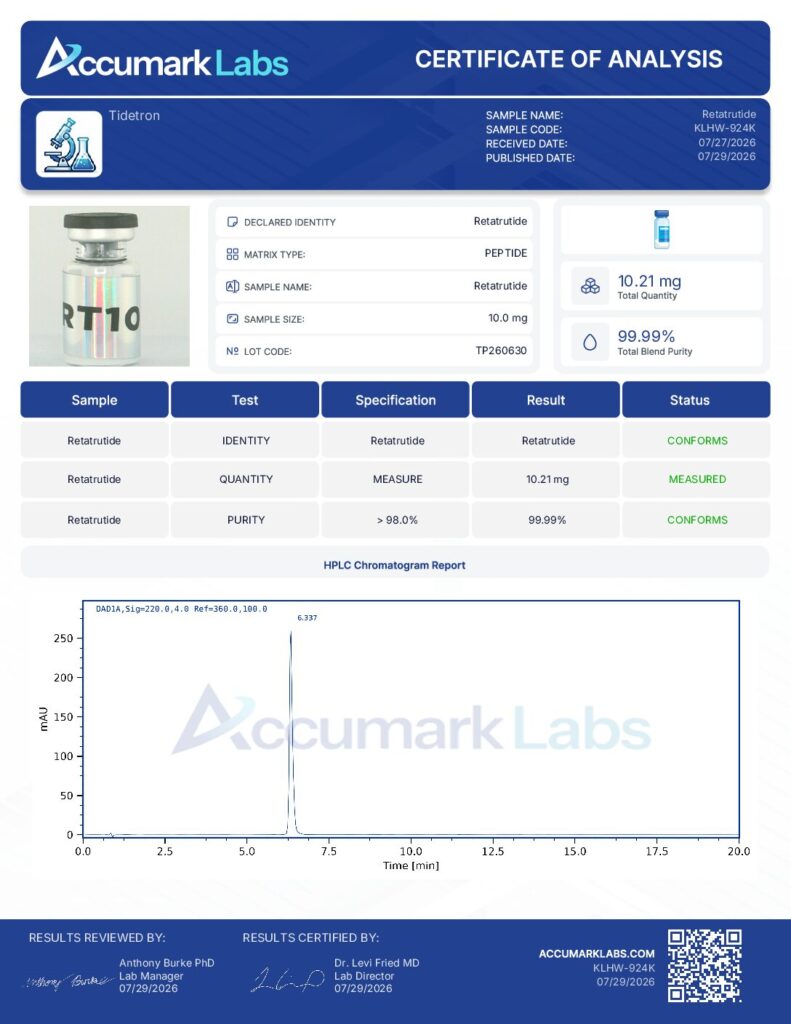
methods designed to investigate identity, composition and other
material-specific characteristics.
High-Performance Liquid Chromatography — HPLC
sample under defined analytical conditions.
Liquid Chromatography–Mass Spectrometry — LC-MS
provide complementary information relevant to peptide identity and molecular
characterization.
Mass Spectrometry
evaluating whether detected material is consistent with the expected compound.
Quantity / Content Analysis
regarding the amount of material detected within an analyzed sample.
Why Batch-Specific Documentation Matters
individual production lot.
- lot or batch number;
- compound identity;
- nominal vial quantity;
- analytical methodology;
- reported analytical results;
- testing date;
- testing laboratory;
- available chromatographic or molecular information;
- supporting analytical documentation.
Review Current R3TA Documentation
Researchers should review currently available analytical documentation
associated with the applicable Nexigen production lot.
Laboratory Handling and Storage
analytical method and laboratory protocol.
material-specific stability information where available.
- moisture;
- excessive heat;
- direct light;
- uncontrolled temperature fluctuations;
- environmental contamination.
administration instructions.
R3TA / Retatrutide Research Resources
R3TA / Retatrutide Research Peptide
Nexigen Research Library
R3TA Batch Documentation
Nexigen Research Materials
Reference Resources
R3TA / Retatrutide Research FAQ
What is R3TA?
retatrutide, also identified in scientific literature as
LY3437943.
What type of research peptide is retatrutide?
GIPR, GLP-1R and GCGR.
What is the CAS number associated with retatrutide?
2381089-83-2.
What quantities of R3TA does Nexigen offer?
10 mg and 20 mg research formats.
Why is retatrutide described as a triple-receptor agonist?
GLP-1 receptor and glucagon receptor within a single research compound.
Does Nexigen provide R3TA batch documentation?
documentation associated with the applicable Nexigen production lot.
How should R3TA research material be stored?
Nexigen product label and applicable product and batch documentation.
Is Nexigen R3TA intended for human use?
analytical and scientific research and is
not intended for human or veterinary use or consumption.
Research Use Only
Nexigen supplies this material exclusively for legitimate laboratory,
analytical and scientific research. It is not intended for human or veterinary
use or consumption. Nexigen does not provide medical advice, dosing
recommendations or personal-use guidance.
R3TA – / Research at a Glance
Quick Answer
R3TA Research Peptide – 10 mg / 20 mg is presented by Nexigen as a research peptide for legitimate laboratory, analytical and scientific research.
Key Facts
- Research material: R3TA – /
- Page type: Product-specific research material page
- Related research resources: 5
- Aliases/search terms: r3ta, retatrutide
Evidence Interpretation
Research findings linked from this page may come from biochemical, cellular, animal or human studies depending on the compound. Those evidence levels answer different questions and should not be treated as interchangeable.
What This Page Does Not Establish
This page does not establish human or veterinary safety, efficacy, dosing, administration or a clinical indication. Nexigen does not provide personal-use guidance.