FREE 2–3 DAY U.S. SHIPPING ON QUALIFYING RESEARCH ORDERS OVER $99

LABORATORY RESEARCH MATERIAL

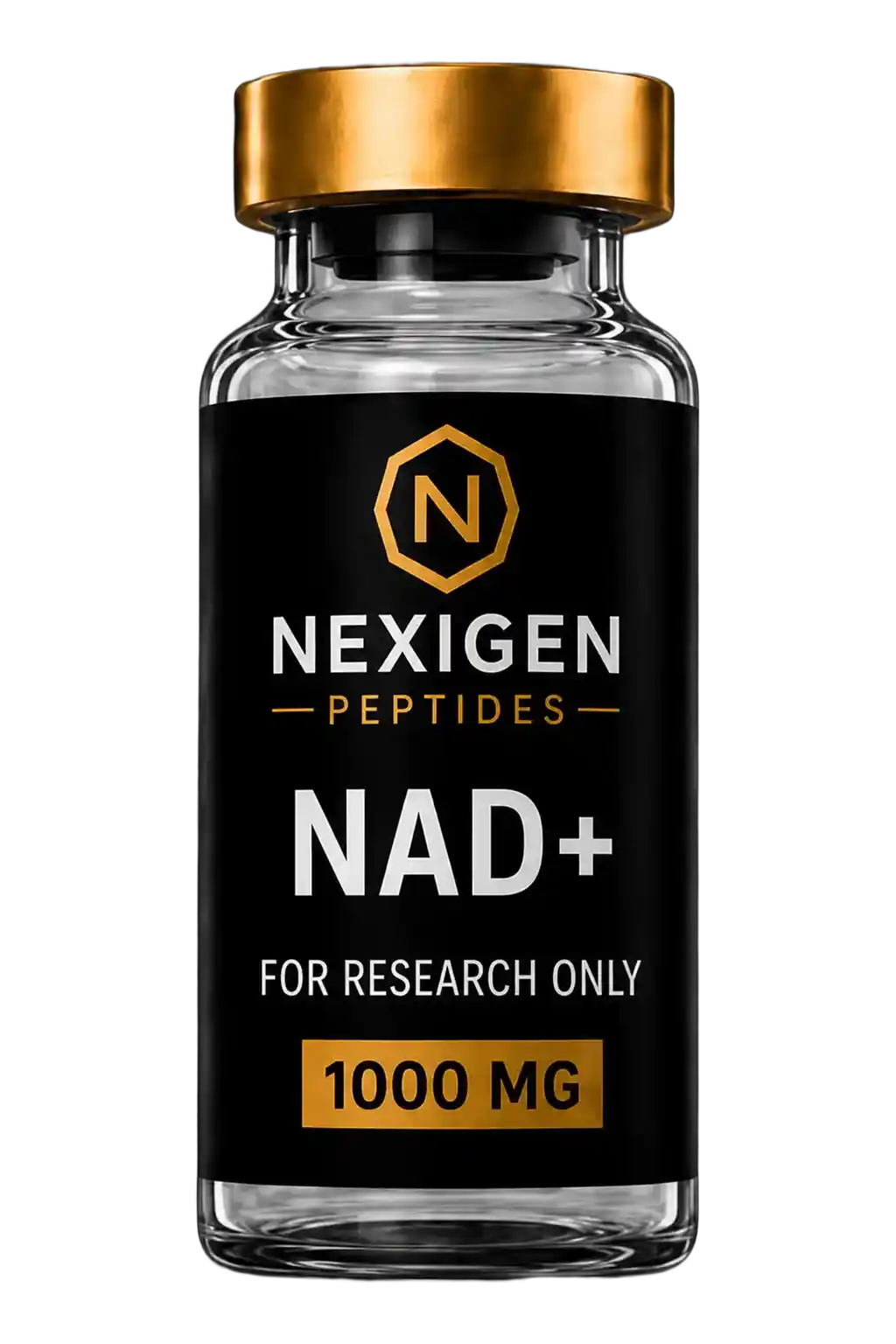
NAD+ 1000 mg Research Material

$125.00

LABORATORY RESEARCH MATERIAL

NAD+ (nicotinamide adenine dinucleotide) is a naturally occurring dinucleotide coenzyme extensively investigated in biochemical, metabolic and cellular research. The oxidized form, NAD+, participates in reduction-oxidation reactions and also serves as a substrate for multiple NAD+-dependent enzyme systems.

Nexigen NAD+ 1000 mg is supplied exclusively as a research-use-only material for laboratory, analytical and scientific investigation. Researchers can review technical specifications and available batch documentation associated with the material.

FOR LABORATORY RESEARCH ONLY. NOT FOR HUMAN OR VETERINARY USE OR CONSUMPTION.

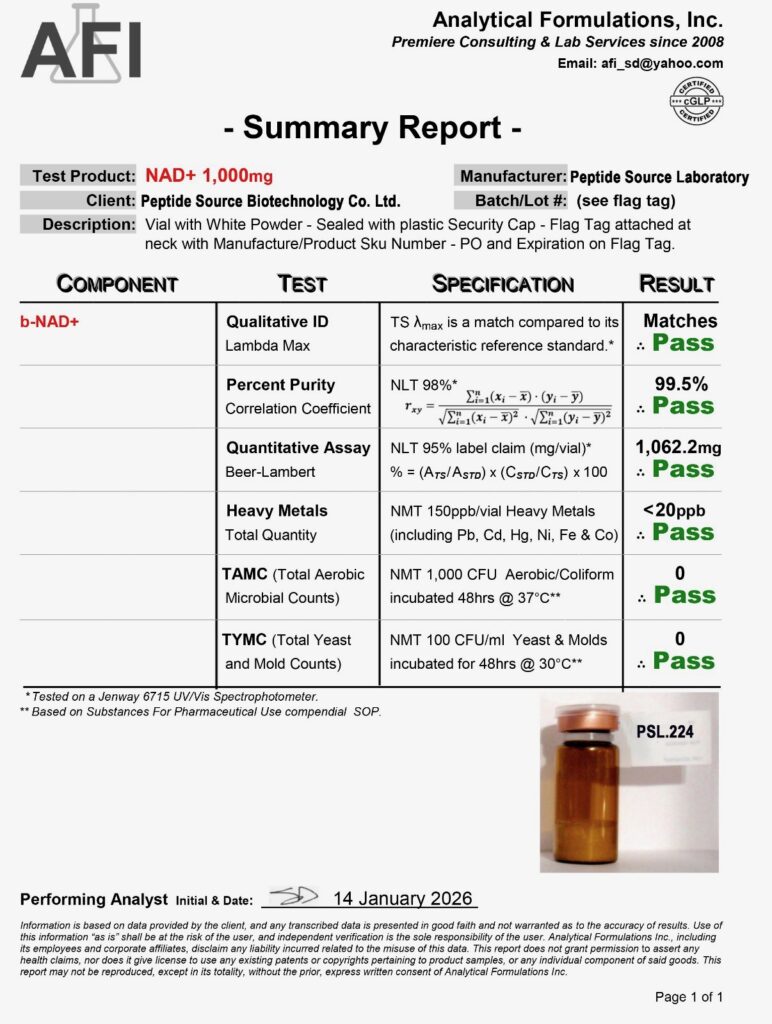
view test results

NAD+ Research Material — Product Overview

NAD+, or nicotinamide adenine dinucleotide, is a naturally occurring dinucleotide coenzyme involved in fundamental biochemical reactions.

NAD exists principally in oxidized and reduced forms, commonly written as NAD+ and NADH. Together, these molecular forms participate in reduction-oxidation, or redox, reactions that are central to cellular biochemistry.

In addition to its function as a redox cofactor, NAD+ serves as a substrate for multiple NAD+-dependent enzymes studied in molecular and cellular research.

Nexigen NAD+ 1000 mg is supplied exclusively as a laboratory research material for analytical and scientific investigation.

The information on this page is provided to identify the research material, explain relevant biochemical research context and provide access to available lot-specific analytical documentation.

This product is intended strictly for laboratory research and is not intended for human or veterinary use or consumption.

NAD+ 1000 mg — Research Specifications

Specification Information
Compound Nicotinamide Adenine Dinucleotide
Common Abbreviation NAD+
Quantity 1000 mg
Compound Type Dinucleotide coenzyme
CAS Number 53-84-9
Molecular Formula C21H27N7O14P2*
Molecular Weight 663.4 g/mol*
Form Enter actual supplied form
Brand Nexigen Peptides
Lot / Batch Refer to current product documentation
Analytical Method Refer to applicable batch documentation
Reported Result Refer to applicable batch documentation
Intended Use Laboratory research only

PubChem identifies beta-nicotinamide adenine dinucleotide under CAS 53-84-9, with molecular formula C21H27N7O14P2 and molecular weight approximately 663.4 g/mol.

What Is NAD+?

NAD+ is the oxidized form of nicotinamide adenine dinucleotide, a dinucleotide coenzyme involved in cellular redox chemistry and NAD+-dependent enzymatic reactions.

NAD+ and its reduced counterpart, NADH, form a biochemical redox pair. The interconversion between these molecular states enables researchers to investigate electron-transfer reactions and other metabolic processes in controlled experimental systems.

NAD+ also functions as a molecular substrate for several classes of enzymes, including sirtuins and poly(ADP-ribose) polymerases, commonly abbreviated PARPs.

Modern research increasingly recognizes that NAD+ biology is highly compartmentalized and dynamic. Different cellular compartments can maintain distinct NAD+/NADH pools, and synthesis and consumption pathways influence the concentrations observed within an experimental system. A major Nature Reviews Molecular Cell Biology review emphasizes that significant questions remain regarding NAD+ metabolism, compartmentalization and measurement.

Nexigen supplies NAD+ exclusively as a laboratory research material.

NAD+ Research Context

Nicotinamide adenine dinucleotide has been studied extensively because of its central role in biochemical redox reactions and its participation in multiple enzyme systems.

Current NAD+ research spans several interconnected areas.

Redox Biochemistry

NAD+ functions as an electron-accepting cofactor in numerous oxidation-reduction reactions. Conversion between NAD+ and NADH enables researchers to examine the transfer of reducing equivalents within biochemical systems.

NAD+-Dependent Enzymes

NAD+ is also used as a substrate by enzymes including sirtuins and PARPs.

Research into these enzyme systems has expanded understanding of how NAD+ availability, enzyme activity and cellular compartmentalization interact within experimental models.

A 2026 review of the sirtuin network describes NAD+ availability as closely linked to the activity of this family of NAD+-dependent enzymes and emphasizes the compartment-specific nature of sirtuin biology.

NAD+ Synthesis and Consumption

Cellular NAD+ abundance reflects both synthesis and consumption.

Modern laboratory methods increasingly attempt to distinguish those processes rather than treating a measured NAD+ concentration as a static value.

Recent research has described the use of stable-isotope pathway tracing and high-resolution mass spectrometry to investigate the relative contributions of NAD+ synthesis and consumption within experimental systems.

Cellular Compartmentalization

NAD+ and NADH are not necessarily distributed uniformly throughout a cell.

Research has identified distinct metabolic pools associated with different cellular compartments, making experimental context important when interpreting measurements of NAD+ metabolism.

Scientific literature presented on this page is provided solely to describe areas of laboratory investigation.

It should not be interpreted as establishing that Nexigen NAD+ provides a particular human or veterinary outcome.


Experimental Research Characteristics of NAD+

Research involving NAD+ differs from research involving a conventional peptide because NAD+ is a dinucleotide coenzyme rather than a peptide molecule.

Several characteristics are particularly important when evaluating NAD+ experimentally.

Oxidation State

NAD+ represents the oxidized member of the NAD+/NADH redox pair.

Experimental studies may examine NAD+, NADH or ratios between different redox species depending on the research question.

Enzymatic Participation

NAD+ can function both as a redox cofactor and as a substrate for NAD+-dependent enzymes.

This distinction is important because those functions involve different biochemical pathways and analytical questions.

Compartmentalization

NAD+ metabolism can differ among cellular compartments. Experimental results therefore depend on the biological model, sample preparation and analytical methodology used.

Metabolic Flux

A single concentration measurement does not necessarily reveal how rapidly NAD+ is being synthesized or consumed.

Stable-isotope tracing and high-resolution analytical techniques can provide additional information about dynamic NAD+ metabolism.

Researchers should consult primary scientific literature when selecting methods or interpreting NAD+ experimental results.


NAD+ vs. NADH, NMN and NR

NAD-related terminology can refer to several chemically distinct molecules.

NAD+ is the oxidized form of nicotinamide adenine dinucleotide.

NADH is the corresponding reduced form involved in redox reactions.

NMN, or nicotinamide mononucleotide, is a chemically distinct molecule involved in NAD+ biosynthetic pathways.

NR, or nicotinamide riboside, is another chemically distinct NAD+-related precursor investigated in metabolic research.

These compounds should not be treated as interchangeable.

Recent research continues to investigate differences among NAD+ biosynthetic pathways and precursors. A 2026 Nature Metabolism study directly compared several NAD+-related precursor strategies and demonstrated that their metabolic processing can differ substantially.

A 2025 Nature Metabolism review likewise emphasized that evidence concerning NAD+ precursor metabolism can differ by tissue, experimental design and biological system.


Evaluating NAD+ Research Material

Researchers sourcing NAD+ or other laboratory research materials should evaluate more than the compound name and nominal quantity.

Compound Identity

The product should clearly identify the material being supplied, including the specific NAD+ form where applicable.

Lot Traceability

Researchers should be able to identify which production lot corresponds to the available analytical documentation.

Analytical Methodology

Documentation should indicate the analytical technique used whenever possible.

Batch-Specific Results

A result reported for one lot should not automatically be applied to another lot.

Material Form

Researchers should determine whether the supplied material corresponds to the free compound, a salt, hydrate or other documented chemical form.

Documentation Availability

Relevant Certificates of Analysis and analytical records should be accessible where available.

Nexigen’s objective is to provide transparent product and lot information so research materials can be evaluated using documented analytical evidence rather than generalized promotional claims.


NAD+ Batch Documentation

Nexigen Peptides provides available batch-specific analytical documentation associated with its research materials.

Depending upon the testing performed for a particular NAD+ lot, documentation may include:

  • material identification
  • lot or batch number
  • testing date
  • analytical methodology
  • reported assay or chromatographic result
  • identity-related analytical information
  • testing laboratory information
  • original analytical report

Analytical results apply only to the specific material and lot identified in the corresponding documentation.

Researchers should review the applicable Certificate of Analysis or analytical documentation associated with the current Nexigen NAD+ lot.

How Is NAD+ Research Material Evaluated?

Different analytical techniques can provide different information about NAD+ research material.

Chromatographic Analysis

High-performance liquid chromatography, or HPLC, can be used to separate NAD+-related components under defined analytical conditions.

Chromatographic analysis can help characterize sample composition and quantify relevant components when performed using an appropriately validated method.

Mass Spectrometry

Mass spectrometry can provide complementary molecular information useful in material identification and characterization.

High-Resolution Mass Spectrometry

High-resolution mass spectrometry is also used in contemporary NAD+ pathway research, particularly when researchers need to distinguish metabolites or perform stable-isotope tracing.

Spectrophotometric and Enzymatic Methods

NAD+/NADH systems can also be investigated using spectrophotometric or enzyme-coupled analytical methods depending upon the research objective.

Different methods answer different questions.

Researchers should therefore examine the actual analytical methods reported for the applicable Nexigen batch rather than treating one generalized percentage as complete characterization.

Why Batch-Specific Testing Matters

The name NAD+ identifies the intended research material, but research-quality evaluation should be connected to the specific material that was actually analyzed.

Batch-specific documentation can help establish:

  • which lot was evaluated
  • when testing occurred
  • which method was used
  • what result was reported
  • which chemical form was characterized
  • whether the report corresponds to the material being ordered

For this reason, Nexigen recommends reviewing current lot documentation rather than relying exclusively on generalized company-level claims.

Laboratory Handling

Handling and preparation requirements depend upon the experimental design, analytical method and laboratory protocol.

Researchers should follow validated laboratory procedures, applicable scientific literature and available lot-specific documentation when preparing or handling NAD+ research material.

Factors such as solvent system, concentration, pH, temperature, oxidation state and analytical methodology may influence experimental results and should be controlled according to the applicable research protocol.

Nexigen Peptides does not provide human or veterinary preparation, dosing, injection or administration instructions.


Storage of NAD+ Research Material

Store the material according to the conditions specified in the applicable product documentation and available lot-specific analytical records.

Laboratory personnel should use appropriate procedures to minimize unnecessary exposure to moisture, light, temperature fluctuations or other environmental conditions that could affect material integrity.

Because NAD-related compounds participate in oxidation-reduction chemistry, researchers should also consider the effects of experimental environment, sample preparation and storage conditions when designing analytical procedures.

Where validated compound-specific or lot-specific stability information is available, researchers should follow that documentation rather than generalized storage recommendations.

Current Directions in NAD+ Research

NAD+ remains an active area of biochemical and molecular research.

Recent research has increasingly focused on understanding NAD+ metabolism itself, rather than simply associating higher or lower NAD+ concentrations with broad biological outcomes.

A major 2024 Nature Reviews Molecular Cell Biology review highlighted unresolved questions involving NAD+ compartmentalization, biosynthesis, consumption, measurement and metabolic interactions.

A 2025 review examined connections among NAD+ metabolism and mitochondrial experimental systems while emphasizing the complexity of NAD+-associated biological pathways.

Research published in 2026 continues to examine NAD+-dependent enzyme networks, including the relationship between NAD+ availability and sirtuin activity across different cellular compartments.

Other recent work has used isotope tracing and high-resolution mass spectrometry to investigate how NAD+ synthesis and consumption contribute to measured NAD+ pools.

These developments illustrate an important scientific principle: NAD+ biology is dynamic, compartment-specific and highly dependent on experimental methodology.

They should not be interpreted as claims regarding the intended use or biological effects of Nexigen NAD+.


Regulation of and Challenges in Targeting NAD+ Metabolism

A comprehensive review of NAD+ and NADH metabolism, cellular compartmentalization, biosynthesis, consumption and unresolved research questions.

Migaud ME, Ziegler M, Baur JA. Nature Reviews Molecular Cell Biology, 2024.

NAD+ Precursor Supplementation in Human Ageing: Clinical Evidence and Challenges

A 2025 review emphasizing tissue-specific NAD+ metabolism, limitations of current evidence and challenges in extrapolating findings between research systems.

Nature Metabolism, 2025.

Metabolic Pathway Tracing for NAD+ Synthesis and Consumption

Research describing stable-isotope precursors and high-resolution mass spectrometry for investigating dynamic NAD+ synthesis and consumption.

PubMed PMID: 40498191.

The Sirtuin Network: Linking NAD+ Metabolism and Cellular Regulation

A 2026 review describing the relationship between NAD+ availability, NAD+-dependent sirtuins and compartment-specific cellular research.

PubMed PMID: 42442718.


NAD+ Research Material FAQ

What is NAD+?

NAD+ stands for nicotinamide adenine dinucleotide. It is the oxidized form of a dinucleotide coenzyme involved in reduction-oxidation reactions and NAD+-dependent enzymatic processes.

Is NAD+ a peptide?

No. NAD+ is a dinucleotide coenzyme, not a peptide. Nexigen supplies NAD+ alongside its laboratory research-material catalog, but the compound should not be chemically classified as a research peptide.

This is an especially useful SEO/AI question.

What is the difference between NAD+ and NADH?

NAD+ is the oxidized form of nicotinamide adenine dinucleotide, while NADH is its corresponding reduced form. The NAD+/NADH pair participates in biochemical redox reactions.

What is the CAS number for NAD+?

Beta-nicotinamide adenine dinucleotide is commonly identified by CAS 53-84-9.

What is the molecular formula of NAD+?

PubChem reports C21H27N7O14P2 for the beta-NAD+ record associated with CAS 53-84-9. The exact chemical form supplied by Nexigen should be confirmed using the applicable lot documentation.

What is the molecular weight of NAD+?

PubChem reports an approximate molecular weight of 663.4 g/mol for its beta-NAD+ record. Exact product specifications should correspond to the chemical form identified in Nexigen’s current batch documentation.

What is the difference between NAD+ and NMN?

NAD+ is nicotinamide adenine dinucleotide. NMN is nicotinamide mononucleotide, a chemically distinct molecule involved in NAD+ biosynthetic pathways. They should not be treated as interchangeable materials.

What is the difference between NAD+ and NR?

NR, or nicotinamide riboside, is chemically distinct from NAD+ and is studied as a precursor within NAD+ biosynthetic pathways.

Does Nexigen provide NAD+ batch documentation?

Available lot-specific analytical documentation can be reviewed through Nexigen’s Batch Documentation section and, where applicable, through the corresponding product record.

How can NAD+ research material be analyzed?

Depending upon the research objective, NAD+ may be investigated using chromatographic, mass-spectrometric, spectrophotometric, enzymatic or other validated analytical techniques.

Does Nexigen provide NAD+ dosing or administration instructions?

No. Nexigen Peptides does not provide human or veterinary dosing, injection, administration or treatment instructions.

What is Nexigen NAD+ intended for?

Nexigen NAD+ 1000 mg is supplied exclusively for legitimate laboratory, analytical and scientific research.


Research Use Only

Nexigen NAD+ 1000 mg is supplied exclusively for legitimate laboratory, analytical and scientific research.

This material is not intended for human or veterinary use or consumption, clinical use, diagnosis, treatment, cure or prevention of disease.

Nexigen Peptides does not provide medical advice, human or veterinary dosing recommendations, injection instructions or administration guidance.

Weight 2 lbs
Dimensions 2 × 1 × 2 in
Size

1000mg

NAD+ 1000 mg Research Material is supplied by Nexigen Peptides as a research-use-only material for laboratory, analytical and scientific investigation. The information on this page identifies the material, summarizes relevant scientific context and provides access to available batch documentation. Not intended for human or veterinary use or consumption.
Tirzepatide Price range: $120.00 through $175.00
Select options This product has multiple variants. The options may be chosen on the product page
Verified Lab Testing

Certificate of Analysis

Verified Lab Testing

Certificate of Analysis

Welcome to

Nexigen Peptides

All products sold by Nexigen Peptides are intended for laboratory and research purposes only. They are not for human consumption, veterinary use, or medical applications. You must be 21 years or older to purchase. Misuse of these products is strictly prohibited.

You must be 21 or older to access this site.